
2. Which one is better for the environment?

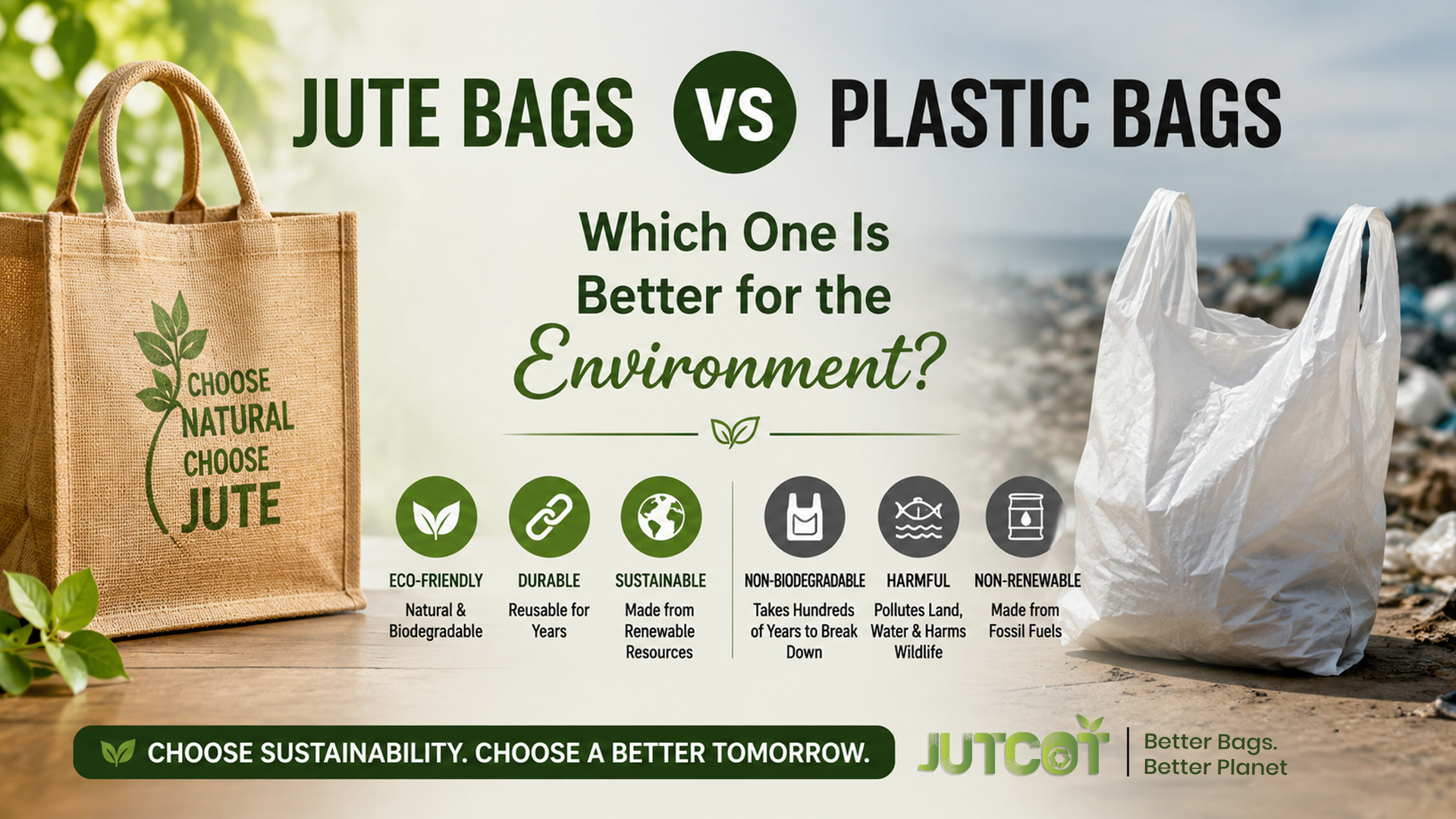
Jute Bags vs Plastic Bags: Which One Is Better for the Environment?
In today’s environmentally conscious world, the choice of packaging and shopping bags has become more important than ever. As concerns about pollution and waste continue to grow, consumers and businesses are actively searching for sustainable alternatives to single-use plastics.
Among the most popular options, jute bags have emerged as a practical and eco-friendly replacement for plastic bags. But how do they really compare?
Let’s explore the differences between jute bags and plastic bags to understand which option is better for the environment.
Understanding Plastic Bags
Plastic bags have been widely used for decades because they are lightweight, inexpensive, and easily available. However, their convenience comes at a significant environmental cost.
Most plastic bags are designed for single use. Once discarded, they often end up in landfills, waterways, and natural ecosystems where they can remain for hundreds of years without fully decomposing.
Environmental Challenges of Plastic Bags:
- Contribute to long-term pollution
- Harm wildlife and marine ecosystems
- Block drainage systems and waterways
- Increase landfill waste
- Depend on non-renewable fossil fuels for production
While plastic bags may seem convenient, their environmental impact extends far beyond their short period of use.
What Makes Jute Bags Different?
Jute bags are made from natural plant fibers obtained from the jute plant. Often referred to as the “golden fiber,” jute is one of the most sustainable and biodegradable materials available today.
Unlike plastic bags, jute bags are designed for repeated use and naturally break down over time without causing long-term environmental damage.
Key Features of Jute Bags:
- Made from natural fibers
- Biodegradable and compostable
- Strong and durable
- Reusable for years
- Renewable resource
These qualities make jute bags a preferred choice for environmentally responsible consumers and businesses.
Environmental Impact: Jute vs Plastic
Biodegradability
One of the biggest differences between jute and plastic is how they behave after disposal.
Plastic bags can take hundreds of years to degrade and often break into smaller microplastics that continue polluting the environment.
Jute bags naturally decompose and return to the soil without leaving harmful residues behind.
Winner: Jute Bags
Reusability
Plastic bags are often used once and discarded.
Jute bags are designed for multiple uses and can withstand heavier loads and regular handling.
A single jute bag can replace hundreds of plastic bags over its lifetime.
Winner: Jute Bags
Resource Consumption
Plastic production relies heavily on petroleum-based resources.
Jute, on the other hand, is a renewable crop that grows quickly and requires relatively low levels of chemical fertilizers and pesticides.
Winner: Jute Bags
Waste Generation
Single-use plastic bags contribute significantly to global waste generation.
Because jute bags are reusable and biodegradable, they create far less long-term waste.
Winner: Jute Bags
Why Businesses Are Choosing Jute Bags
Modern consumers increasingly prefer brands that demonstrate environmental responsibility.
Businesses are adopting jute bags because they:
- Support sustainable packaging initiatives
- Improve brand image
- Appeal to eco-conscious customers
- Offer long-term promotional value
- Reduce dependence on plastic packaging
A branded jute bag often continues to be used long after purchase, increasing visibility while supporting sustainability goals.
Common Uses of Jute Bags
Jute bags have become popular across various industries, including:
- Retail shopping
- Grocery stores
- Corporate gifting
- Promotional events
- Trade exhibitions
- Fashion and lifestyle brands
- Sustainable packaging solutions
Their versatility makes them suitable for both personal and business use.
The Growing Shift Towards Sustainable Packaging
Governments, businesses, and consumers around the world are encouraging the reduction of plastic waste. As environmental awareness continues to rise, sustainable packaging solutions are becoming an important part of responsible business practices.
Jute bags represent more than just an alternative to plastic, they symbolize a commitment to a cleaner and greener future.
Choosing reusable and eco-friendly packaging helps businesses align with changing consumer expectations while contributing positively to the environment.
Conclusion
When comparing jute bags and plastic bags, the environmental advantages of jute are clear. Jute bags are reusable, biodegradable, durable, and made from renewable natural fibers, making them a far more sustainable choice than single-use plastic bags.
As individuals and businesses seek ways to reduce their environmental footprint, switching to jute bags is a simple yet meaningful step toward sustainability.
At JUTCOT, we are committed to promoting eco-friendly alternatives through high-quality reusable bags designed for modern needs.
Choosing a jute bag today is not just a packaging decision, it’s a decision for a better tomorrow.


